From Desert Storm to Solar Surge: Building an Apprenticeship Program
- Employer
- Job Seeker
- Trainer & Educator
- Apprenticeships
- Career Descriptions
- Solar Energy
- Training and Certification
A solar installer based in Springfield, Missouri is rolling out a new Registered Apprenticeship program for electricians to address the skills shortage in U.S. renewable energy industries
As a U.S. Army electrician on active duty in Germany, Bud Pierce had a ringside seat to the fall of the Berlin Wall in 1989. Noticing the proliferation of German rooftops with solar panels during that time foreshadowed his current role. Now, Pierce is at the helm of That Solar Company, a residential solar installer based in Springfield, Missouri. The company is now rolling out a new Registered Apprenticeship (RA) program for electricians to address the skills shortage in U.S. renewable energy industries.
The former Sergeant First Class had come up the ranks as an apprentice electrician working on helicopters. “I was in [Operation] Desert Storm when General Schwarzkopf flew in to sign the peace treaty to formally end the Gulf War in 1991. He was surrounded by Apache helicopters I’d been working on,” Pierce says.
Pierce obtained his journeyman’s electrical license in 1998, then his master’s license in 2005, both while in the Army. He’s since gained master’s licences in four U.S. states — Oklahoma, Arkansas, Kansas, and his home state of Missouri. Just over five years ago, Pierce had his heart valves replaced. Unable to continue hands-on work due to his condition, Pierce turned to consultancy. However, the inconsistency of consultancy work led him to start his own company. He now employs 25 people.
“People wanted to employ me as an electrician, so I built out a team and had young folks be my arms and legs while I instructed them on the work,” he says.
Building an Electrical Apprenticeship Program
“Electrical training is second nature to me,” Pierce says. “For my company’s Registered Apprenticeship program, I found the Department of Labor and their apprenticeship offices really helpful. They approved it in just two months from when we lodged it. The [DOL] really wants companies to set up these apprenticeship programs and get a trained workforce out there.”
The Department of Labor approved That Solar Company’s four-year Registered Apprenticeship Program in June 2024. Apprentices will get a solid grounding in electrical work and solar energy through an earn-while-you-learn approach. Pierce is the main instructor, using Mike Holt’s curriculum and virtual theoretical classes where possible. He likens the program to having an “electrical major and a solar minor,” drawing an analogy with a college degree.
Pierce emphasizes that this occupation requires a variety of skills, both physical and mental. “It’s not for everyone,” he says. “You have to be able to carry things up a ladder and still maintain three points of contact, and you need to be OK working at heights, or tight spaces, even crawl spaces. Electricians do a lot of math, it’s all trigonometry and elevations.”
Building a Sustainable Workforce
Pierce likens his setup to a virtual community college model, making training more accessible than an in-person program. He’s also looking to recruit people from low-income communities into his apprenticeship program.
Pierce also appreciates the attributes that military veterans may offer. “I know my Army years helped teach me attention to detail, because if we have the detail, the big picture will be fantastic.”
Pierce partnered with group apprenticeship program intermediary and not-for-profit IWSI America, which has more than four decades of experience guiding industries on apprenticeship and workforce development strategies. Deborah Williamson, PhD and VP, and Bill Kraus, a Registered Apprenticeship expert with IWSI, were instrumental in working with Pierce on That Solar Company’s Registered Apprenticeship program.
“We helped connect Pierce to key people in the apprenticeship system to fast-track his application and to access incentive dollars for his program,” says Kraus, a former U.S. Navy commander. “Once all that was in place, it was like soup to nuts; the whole meal was sorted.”
“Bud Pierce’s level of commitment, knowledge and enthusiasm is a contagion that brings great joy to our work as apprenticeship specialists, and inspires us to deepen our own commitment to expanding apprenticeship in America,” Williamson adds.
IWSI America is part of the Apprenticeships in Clean Energy (ACE) Network, steered by the Interstate Renewable Energy Council (IREC).
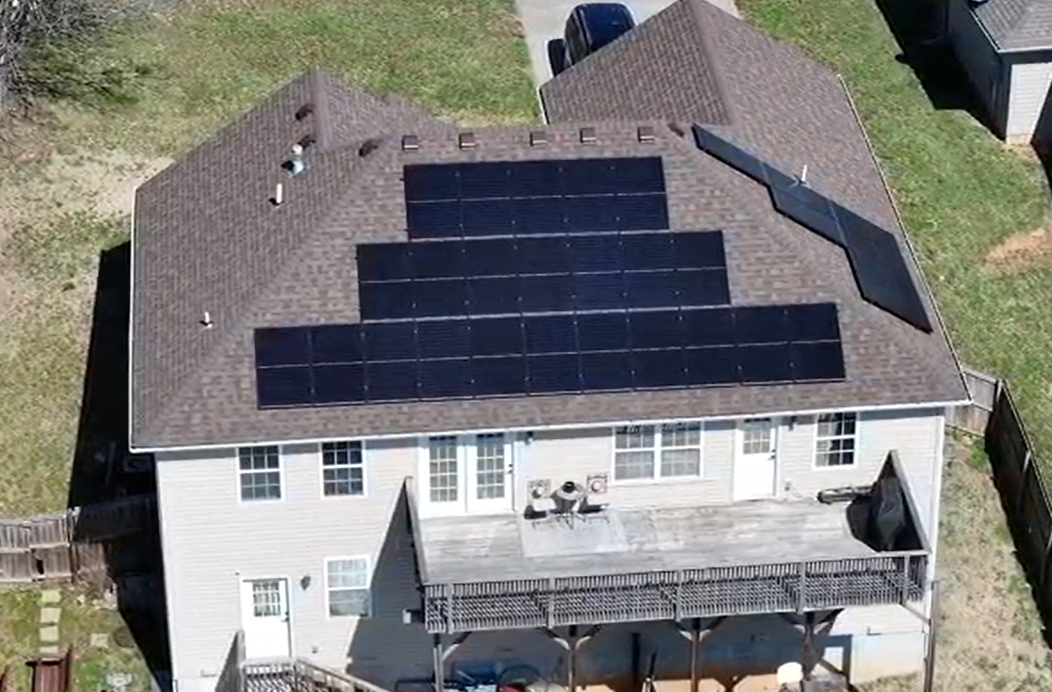
As Pierce attests, electricians in the solar industry do much more than “just put panels on a roof and plugging them in.” For instance, his company does commercial and residential electrical work for solar panels, panel upgrades, and battery and electrical vehicle chargers.
“The industry can’t continue to have unqualified people doing electrical installations. We need to create more programs like Registered Apprenticeships that embrace digital technologies before people my age and older disappear. We need to teach the people below us how to do this trade properly,” Pierce says.
Pierce aims to have at least 20 active apprentices on staff within four years.
“I’ve always had a training culture in my company, but it’s moving up another level now with a formal Registered [Apprenticeship] Program,” Pierce says.“It moves our industry beyond just on-the-job training to achieving nationally recognized qualifications workers can pivot off for lifelong learning throughout their careers.”
He acknowledges that setting up a Registered Apprenticeship program shouldn’t be a solo effort.
“I couldn’t have done this by myself. It’s always easier to deal with organisations that have been down this path. If I didn’t partner with IWSI and the state apprenticeship offices, this process would have been a lot longer.”
Photos courtesy of That Solar Company
Learn More